AI automation for beach bars, before the weekend decides
On a Friday at 26 degrees the queue runs onto the promenade, your ice is gone by four and you are one short behind the bar. We look first at where your hours go, and only then at what a computer takes off you.
Afullterraceisnotaproblem.AfullterraceyoudidnotseecomingyesterdaycostsyouyourSaturday.
What does Nivora Works do for a beach bar?
Nivora Works is a software and AI studio in Bruges that builds what is missing between your till and your phone. A booking system that takes over the three hundred messages a week. A layer that works out who gets confirmed straight away and who waits. One screen with the day on it, for whoever opens the shift. A team that enters its own hours and availability. And, two days out, an estimate of how busy it will be, so the order and the calls go out on Thursday instead of Friday afternoon. Your registered till stays the till: we come alongside it, never in front of it.
It does not start with the technology, it starts with your week. Monday the order to the wholesaler, Wednesday the rota, Thursday the calls, Saturday the rush: we walk that week through with you and mark every place where the same work happens again and again.
A season is short, and that changes the order of everything. We put things in place in the pre-season, let them run through July and August in the real rush, and sit down in September to see what the season taught us. Something that works on a quiet Wednesday and falls apart on Saturday at eight is not finished.
The solutions that fit this trade
Each of these is a thing we build and a thing you can ask for. Open one to see what it does and where it stops.
Off WhatsApp
Your guest books through your own site or app, with a waiting list when you are full. Three hundred messages a week become one list per day.
See what this looks like
Who gets the bed
Regulars confirmed straight away, unfamiliar names on hold until you know. You keep the decision, the system prepares it.
See what this looks like
The day on one screen
Every booking, the places still free, who is working and the forecast per hour. One picture, behind the bar, for whoever opens the shift.
See what this looks like
Who works Saturday
Your team marks its own availability and enters its own hours after the shift. You confirm one list instead of counting fifteen messages.
See what this looks like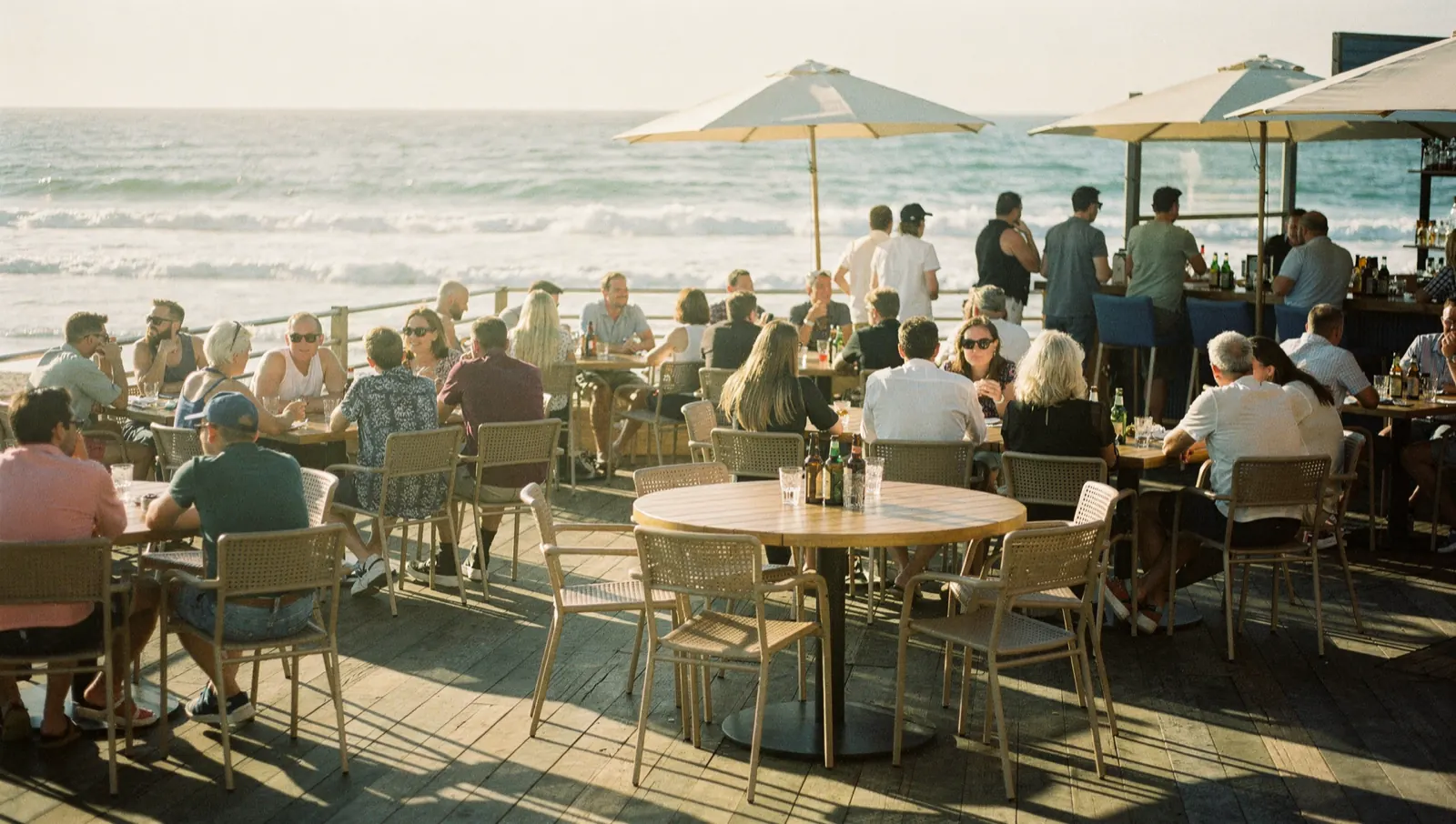
How busy it gets
One sheet every evening for the day after tomorrow, out of your own till, the weather and the tide, with an honest monthly score.
See what this looks likeWhere the time goes in a beach bar
No two weekends are the same. An offshore wind, a tide that falls right and the sun staying on your terrace until late, and it is full until eleven. Two degrees less and a shower at four, and you are left with fresh mise en place that will not keep. That judgement lives in one person's head, and that person is out on the floor serving.
The bookings come in through four different doors. On the landline in the middle of service, in your Instagram messages, through the form on your site and on WhatsApp. In a good season that is three to four hundred messages a week, and one person reads all of them, answers all of them and is the only one who knows what Saturday actually looks like.
And every week the same round of asking. Who can work Saturday, how many hours did you do, can you come in two hours earlier. Fifteen people, fifteen separate replies, and at the end of the month somebody adds it all up by hand before it goes to the payroll office.
How we come in
Work a service first
We come and look when it is busy, not on a Tuesday morning in April at ten. Who picks up the phone during service, where the order list hangs, who decides how much gets prepped: none of that is written down anywhere, and that is exactly what we need to see.
On top of your till, not in front of it
The first question is always whether it works with your till. Lightspeed, a tablet till or a system that has been there for ten years: we look at what can come out of it before we promise anything. We replace nothing, we pull out the figures you are currently retyping by hand and put them where the decision actually gets made.
Built for a short season
If your business really runs four months, paying twelve for something is not sensible, and that is not how we settle up either. We put one thing right before the season, it runs through the busiest weeks, and if it did not hold up we say so in September rather than selling you a second piece on top of it.
Does this sound familiar?
If two or more of these land, there is almost certainly something to gain.
- Your bookings live in a chat window on your own phone
- Only you can decide who still fits in on a busy Saturday
- Your team reports its hours afterwards, by message
- You only know on Saturday morning how many people are coming
What we are not going to claim
We are not going to say hospitality software does not exist yet. Lightspeed, Untill, Yoreco and Trivec have been on the counter for years, Formitable, Zenchef, Resengo and TheFork take the bookings, and Apicbase in Antwerp does food cost. We do not replace any of them and sometimes we point you towards them.
We are not going to say we predict the weekend better than anyone else. Your own till already shows what the same kind of Saturday did last year, and parties like Delicious Data, Foodforecast and Tenzo sell that forecast on its own. What we add is that the answer sits with you at the hour you order, not in a report nobody opens.
And we are not going to say a robot should talk to your guests. A guest ringing at eleven on Saturday to cancel would rather hear a person, and on the coast a large part of what keeps people coming back is exactly that. What we prepare is the answer, and someone on your team presses send.

Stop worrying about AI
We weigh up what AI can genuinely do for a business like yours, cut through the noise, and keep you posted on what actually matters. You stay in the loop, without the hype.
Questions, answered
The things people usually want to know before they reach out.
That is the first question everyone asks, and rightly so. Lightspeed, a tablet till or a system that has been there for ten years: we look at what can come out of it before we promise anything. Your registered till stays exactly where it is, with the same tickets and the same VAT rates for eat in and takeaway. If your till will not release anything, we say so up front and look for another way in.
Still have a question?
Visit the Help CenterSend us your busiest Saturday
One weekend of till figures, the messages that came in by phone and by chat that same week, and the hours your team ended up reporting. Within the week we tell you which part of that can run by itself and which part is better left to people, before anything is agreed or signed.