
AI automation for the port sector, from declaration to release

A declaration that has to be in before the vessel sails, a container that is released but has no time slot, and the one colleague who knows how that particular file fits together. We first count where the hours actually go, then take over the part that comes back every week.

Thedeclarationisnotthework.Everythingthathastobegatheredbeforeitcangoout,thatisthework.

What does Nivora Works do in the port sector?

Nivora Works is a software and AI studio in Bruges working for the businesses around the Flemish ports: forwarders, customs brokers, ship agents, container haulage, bonded warehouses and survey practices. We take over the recurring work between the systems: reading what arrives as mail or PDF and putting it where it belongs, watching the terms that run per file, and finding back what was agreed on a shipment two years ago. We do not replace CargoWise, Descartes or your own package, and we do not sit between you and IDMS, AES, NCTS or Certified Pick up. What we build hangs alongside them, and where the data is sensitive the model runs on hardware in your own office.

These are different trades and we write that down rather than around it. A ship agent watches a shifting ETA, a customs broker watches a declaration term, a haulier watches a time slot, and a surveyor comes back with four hundred photos. What they share is that the official system is not the problem: the problem is everything a person does around it by hand.

So we start with one bounded piece in one trade. Not a platform for the port, and not a project that begins with a six month analysis. One thing, running alongside your own way of working for a fortnight, and then you decide what is next.

Where the hours go in this chain

The systems are in order and the space between them is not. A booking arrives by mail, an invoice as a PDF, a packing list as a photograph of a paper, and a person copies those into the declaration by hand. What arrives structured goes in cleanly; what does not is where your people sit. In most offices that is not a rare exception but the largest single block of the day.

Everything runs on a clock and none of the clocks are in the same place. A transit that has to be discharged, a bonded entry with its own term, a release that is granted while the slot is not, free days that quietly expire and turn into demurrage. Each of those lives in a different screen and none of them warns you a week ahead, so the follow-up sits in somebody's spreadsheet or in their head.

The mailbox holds messages that matter and messages that do not, in the same pile. A carrier announcing a shift, a terminal announcing a closing, a supplier confirming something nobody asked about. Four hundred messages a day and the one that changes a file is between them. And what the office knows about a difficult commodity, a particular consignee or a customs question that came up in 2019, sits with the colleague who has been there twenty five years.

How we go about it

Count first, build later

Half a day beside your operations desk on an ordinary Tuesday, tallying what comes in. How often something gets retyped that already existed digitally, how often the same question is answered, how often somebody goes looking for a document. Out of that count comes one thing to do first, and sometimes the honest answer is that your package already covers it.

Beside your package, never between you and the authorities

CargoWise, Descartes or your own system keeps holding the file, and IDMS, AES, NCTS and Certified Pick up keep being the systems you file in. We do not put ourselves in that path: a declaration goes out through the channel it goes out through today, filed by the person who is authorised to file it. What we build prepares, checks and flags on the way there.

The data stays where you want it

Commercial invoices, customer prices, a customs question your competitor should not read: none of that has to travel to a server on the other side of the world. Where it matters we run a model on hardware in your own office, otherwise inside Europe with a data processing agreement on paper. You see in plain language which mailboxes and which years went in, and you can take it back out.

Design work in progress on a screen, part of building software to order

What we can automate in the port sector

Four things that come back across the whole chain, whichever of these trades you are in. We build them one at a time, and it starts with whichever one your own count puts first.

Paper documents partly overlapping on a desk in a port office

The full set

Before a declaration or a file goes out you see the whole set side by side and what is missing from it: the invoice, the packing list, the transport document, the certificate that belongs to this particular commodity. What arrives as mail, PDF or a photograph of a paper is read and put into the fields you would otherwise fill by hand, with the source shown next to every figure so a check takes seconds.
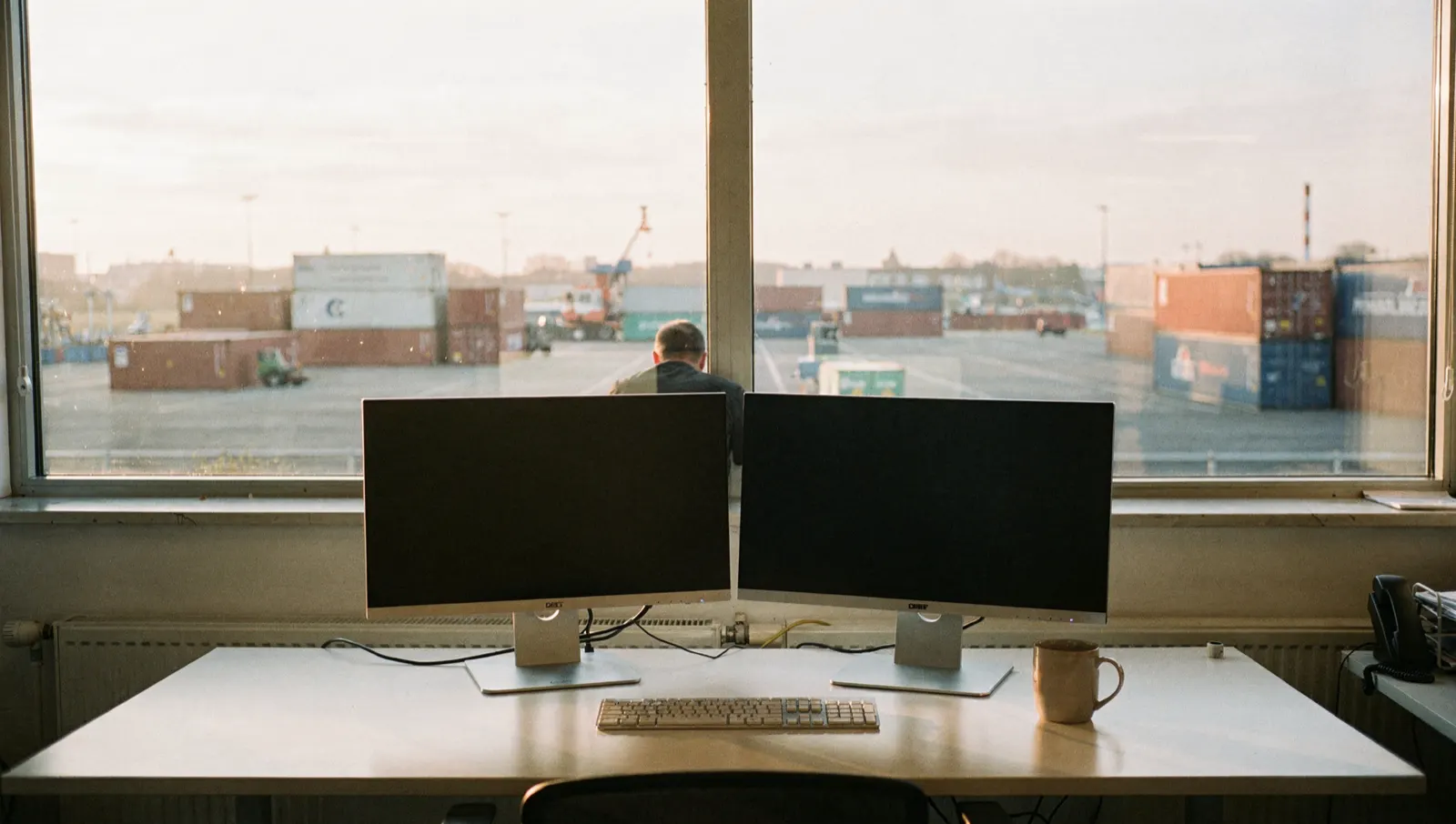
A dispatcher desk at dawn with cranes through the window

The clock that runs

One counter across the terms that live in different screens: a transit to be discharged, a bonded entry, free days before demurrage, a release without a slot. It knows the rule that applies to your file and it runs beside your own planning, so you hear it the week before rather than on the day. Nothing is filed automatically; you get the five files that need attention today.

A wall of plain wooden pigeonhole mail slots in an office corridor

Carrier mail

Four hundred messages a day, and the handful that actually change a file are read and put on that file or that run. A shifted ETA lands on the call, a terminal closing lands on the trips that were planned into it, a rate notice lands where the quote sits. The rest stays in the mailbox where it belongs, and nothing is deleted or answered on your behalf.

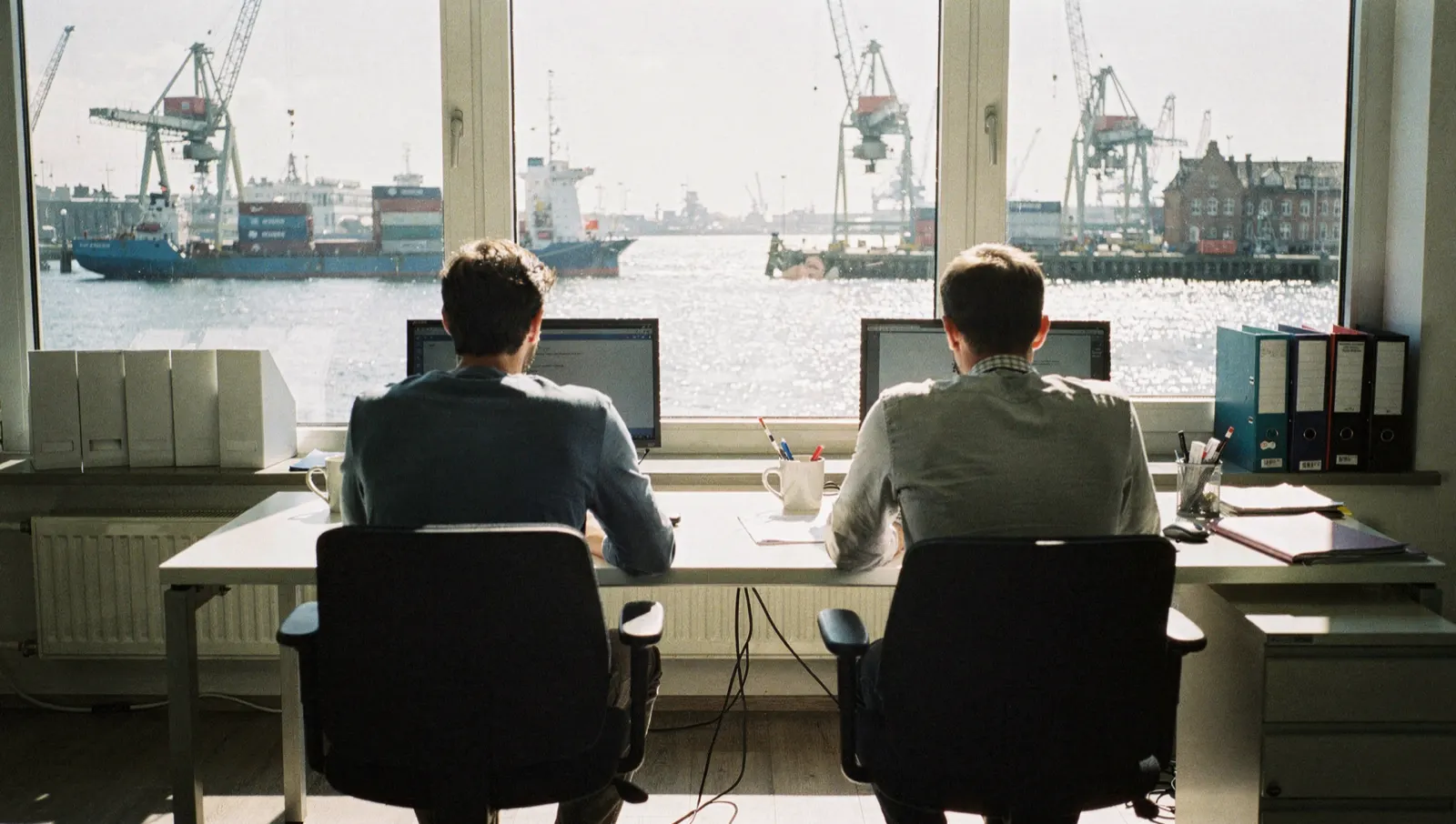
Two colleagues side by side at a desk in an office, seen from behind

One head, one file

Ask a plain question and get the answer out of your own years of files and mail, with the document behind it: what was agreed with that consignee, how that commodity was classified last time, what went wrong on this route in 2019. Built for the week your longest serving colleague is away, and for the year he retires.

Does this sound familiar?

If two or more of these land, there is almost certainly something to gain.

  • Somebody retypes a packing list that came in as a PDF
  • A term is followed up in a personal spreadsheet rather than in the system
  • Free days expire and the first you hear of it is the invoice
  • One colleague is the only one who knows how that consignee's files work

What we are not going to claim

We are not going to say the port has no software. CargoWise and Descartes have run forwarding and customs for years, the terminals at Antwerp and Zeebrugge have their own portals, NxtPort and Port Plus have been moving data between parties for a long time, and Certified Pick up replaced the release code with a right that lives in a system. We come and stand beside all of that.

We are not going to say we make a declaration go through faster. Customs answers when customs answers, a terminal gives the slot it gives, and a vessel sails when it sails. What changes is what has already been gathered by the time you get there, and whether you knew about a problem on Tuesday or on Friday.

And we are not going to say one thing fits all six of these trades. A survey practice with four hundred photos per lot and a haulier with a time slot problem have almost nothing in common in practice. That is why we build per trade and per piece, and why we would rather tell you in the first week that your question belongs with somebody else.

Can this work for us?

Describe the task you keep seeing come back. You get a straight answer on whether it is worth automating, and where your existing software already covers it.

One question, one straight answer. No call, no demo.

Stop worrying about AI

We weigh up what AI can genuinely do for a business like yours, cut through the noise, and keep you posted on what actually matters. You stay in the loop, without the hype.

One short email, now and then. No spam, unsubscribe anytime.

Questions, answered

The things people usually want to know before they reach out.

No, and we would advise against it. Your package holds the file, the history and the rates, and switching it is a project that takes a year out of an operations team. What we build hangs beside it, reads what comes in and either writes the result back or puts it ready for approval. If your package cannot exchange anything at all, we say so before we start rather than halfway.

Still have a question?

Visit the Help Center

Send us one ordinary week

Take the mailbox of a single week and the files that ran through it, anonymised. Within the week we will tell you which part of that we would take over and which part is better left with your own people, with nothing agreed.